Written by the PetFitness team and reviewed by our Certified Canine Fitness Trainers. Last updated November 26, 2026.
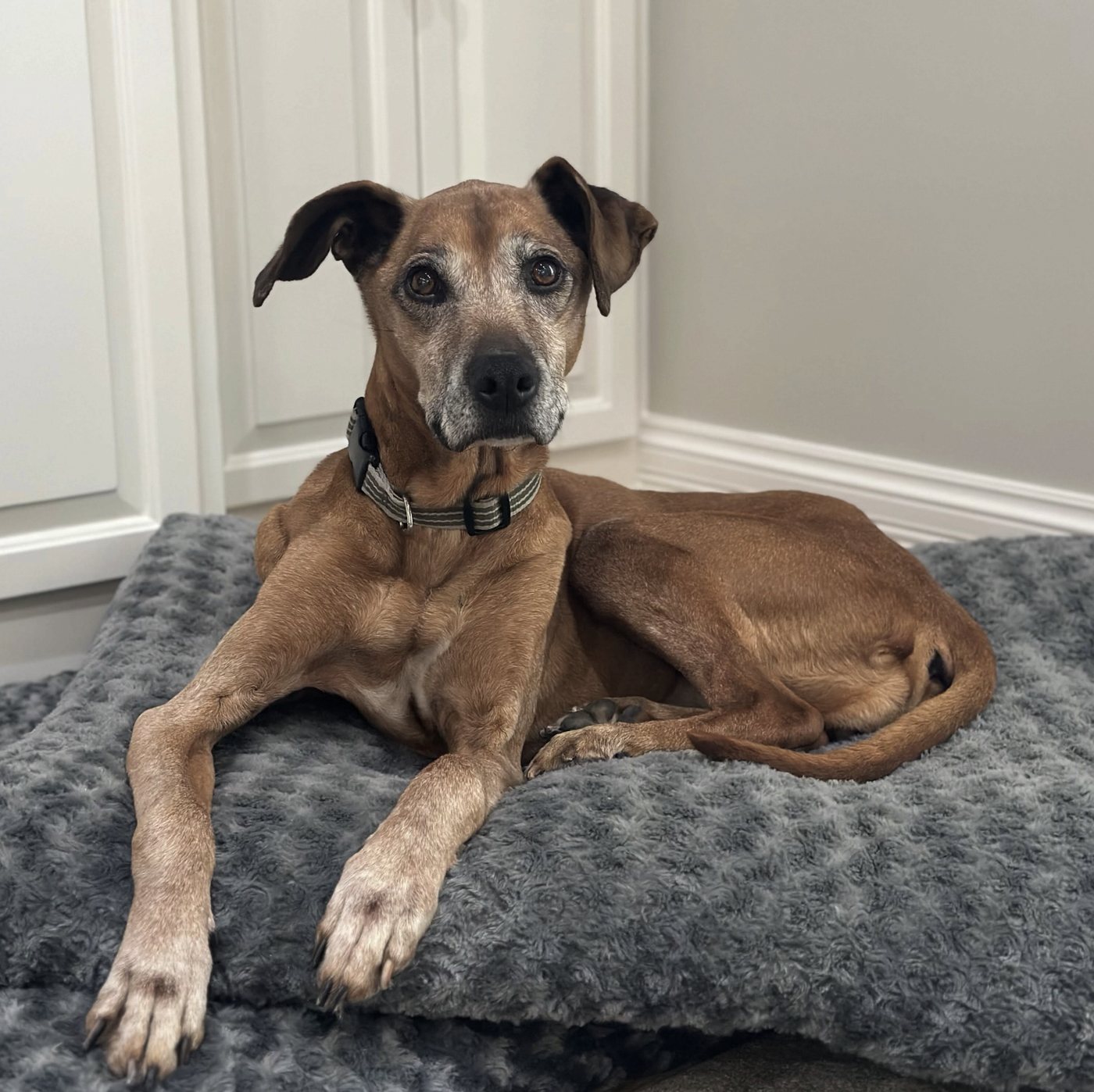
Muscle atrophy in dogs is the loss of muscle tissue. You see it as thinner back legs, a spine or hip bones that stick out more than they used to, and a dog that tires sooner or struggles to get up. It has four main causes: not using the muscle (after an injury, surgery or because of pain), aging, nerve problems and illness.
Muscle lost to disuse can often be rebuilt once the dog is able to use the leg again. Age-related loss can be slowed and partly won back. Loss caused by nerve damage or disease depends on the condition behind it. This guide covers how to spot muscle atrophy early, what each cause looks like, when to see a vet, and a step-by-step way to rebuild strength.
The short version
- What it is: muscle getting smaller and weaker. It is not the same as losing weight. A dog can be overweight and still have muscle loss.
- Where it shows first: along the spine, over the hips and in the back legs.
- Main causes: disuse (pain, injury, surgery, rest), aging, nerve conditions and illness.
- See a vet first: always, and the same day if the loss is sudden, on one side only, or comes with dragging feet, wobbling or pain.
- How to rebuild: treat the cause, add controlled strength work a little at a time, feed enough protein, keep your dog lean, and track progress with a tape measure.
- How long: muscle goes faster than it comes back. Plan in months, not weeks.
What is muscle atrophy in dogs?
Muscle atrophy means muscle fibers shrink and the muscle gets smaller. A smaller muscle is a weaker muscle, so the dog has less power to stand up, climb, jump and hold its joints steady. Vets also call it muscle wasting or muscle loss.
It matters for more than looks. Tufts veterinary nutritionists point out that muscle loss makes an animal weaker and cuts its ability to recover from illness, surgery or injury.
There are four broad types. Knowing which one your dog has tells you what to expect.
| Type | What causes it | Typical pattern | Can the muscle come back? |
|---|---|---|---|
| Disuse atrophy | The dog stops using a leg or moves less because of pain, injury, surgery or crate rest | Often one leg or one area. Can show within weeks | Often yes, once the dog can load the leg again |
| Age-related (sarcopenia) | Aging, with no disease behind it | Both sides, slow, starts along the spine and back legs | It can be slowed and partly rebuilt |
| Nerve-related | Damage to a nerve or the spinal cord, such as degenerative myelopathy or disc disease | Often faster, with weakness, wobbling or dragging feet | Depends on whether the nerve recovers |
| Illness-related (cachexia) | Diseases such as heart failure, kidney disease and cancer | All over the body, even in a dog that still eats | Depends on treating the disease |
The two names in that table come from veterinary nutrition. Sarcopenia is muscle loss from aging in the absence of disease. Cachexia is muscle loss driven by illness. A senior dog can have both at once.
Some loss with age is common. In one comparison, young dogs carried about 79% lean mass and dogs over 7 carried about 70%. Data from 1,273 dogs showed lean mass peaking at around 6.3 years. Common does not mean harmless, and it does not mean nothing can be done.
What muscle atrophy looks like
Muscle loss is easy to miss because it is slow and because fur and body fat hide it. Most owners notice the change in how the dog moves before they notice the shape.
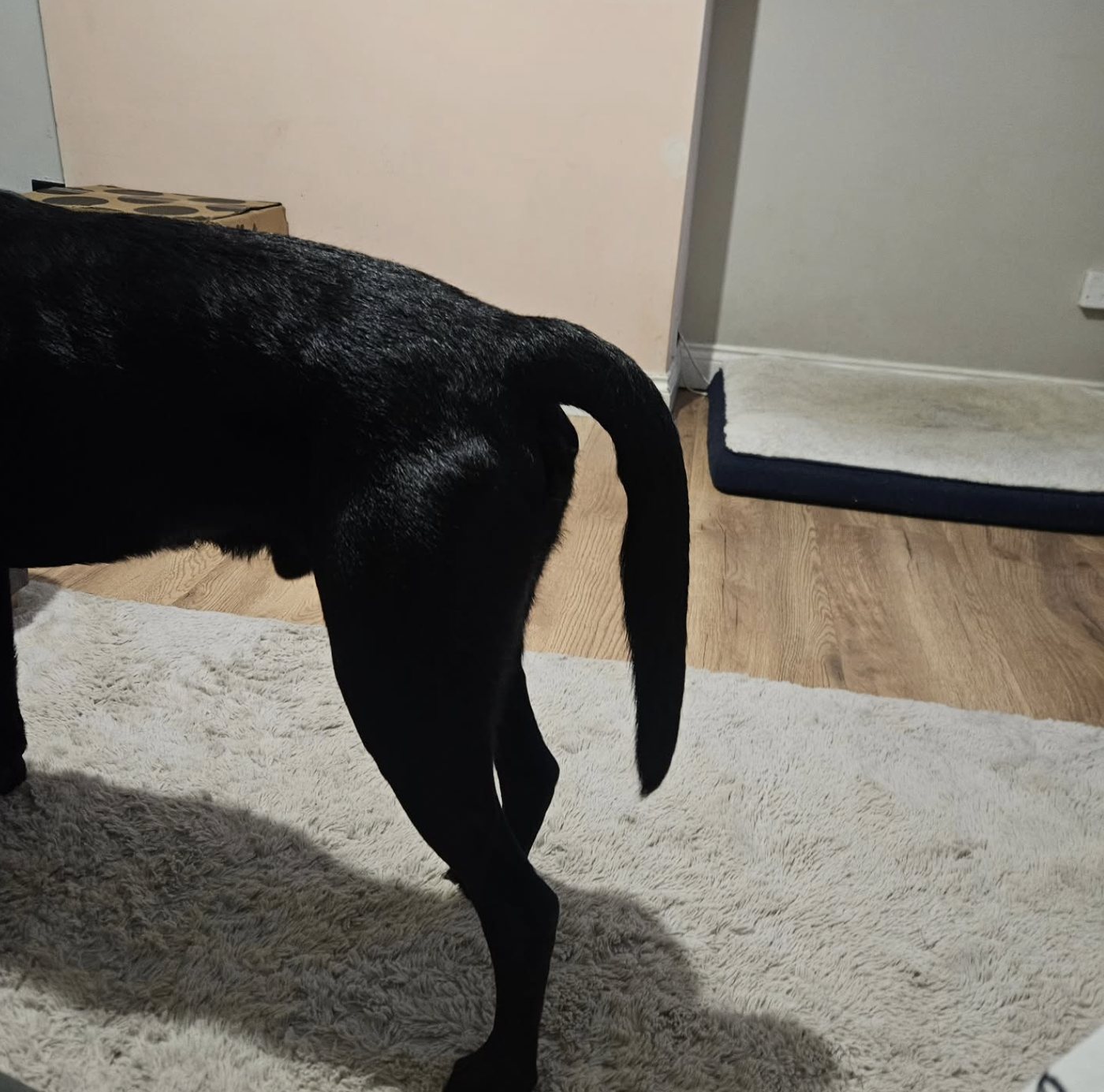
- Thinner thighs. The back legs look narrow from behind, or one thigh is clearly smaller than the other.
- Bones you can see or feel. The spine, hip bones and shoulder blades stand out more than before.
- A bonier head. The top of the skull feels sharper because the muscles on the head have shrunk.
- A narrow stance. The back feet stand close together, or the dog shifts its weight onto the front legs.
- Shaky back legs. The legs tremble when the dog stands still or after a walk.
- Trouble with everyday moves. Getting up, stairs, the car and the couch all get harder.
- Less stamina. Shorter walks, more lagging behind, more sitting down along the way.
The pattern of the loss is a clue to the cause.
| What you see | What it often points to |
|---|---|
| One back leg thinner than the other | Disuse. The dog is protecting a sore knee, hip or paw |
| Both back legs and the spine thinning slowly in an older dog | Age-related loss, often with arthritis |
| Back legs thinning plus scuffed nails, wobbling or crossing feet | A nerve or spinal problem |
| Muscle going all over, with weight loss or a change in appetite or thirst | An illness that needs testing |
| Muscle lost mainly from the head or jaw | A muscle or nerve disease. See your vet soon |
These are pointers, not a diagnosis. If your older dog also has weak or wobbly back legs, our guide to weak back legs in old dogs covers how to tell the slow kind from the urgent kind.
What causes muscle atrophy in dogs?
| Cause | Type | How it usually shows up |
|---|---|---|
| Arthritis, hip dysplasia and other joint pain | Disuse | Slow loss, worst in the sore leg or both back legs |
| Cruciate (ACL) injury | Disuse | One back leg, with the thigh shrinking soon after the injury |
| Surgery, a cast or crate rest | Disuse | Fast loss in the rested leg |
| Too little activity | Disuse | Gradual, all-over softness and less stamina |
| Aging | Sarcopenia | Slow, even loss along the spine and back legs |
| Degenerative myelopathy | Nerve | Back leg weakness and wobbling in an older dog, usually without pain |
| Disc disease or spinal injury | Nerve | Weakness that can come on suddenly, often with pain |
| Heart failure, kidney disease, cancer | Cachexia | Muscle loss across the body |
| Hormone conditions such as Cushing’s disease | Illness | Muscle weakness, often with a pot belly and more drinking |
| Too little protein or too few calories | Diet | Gradual loss, sometimes during a weight loss diet |
Disuse: pain, injury, surgery and rest
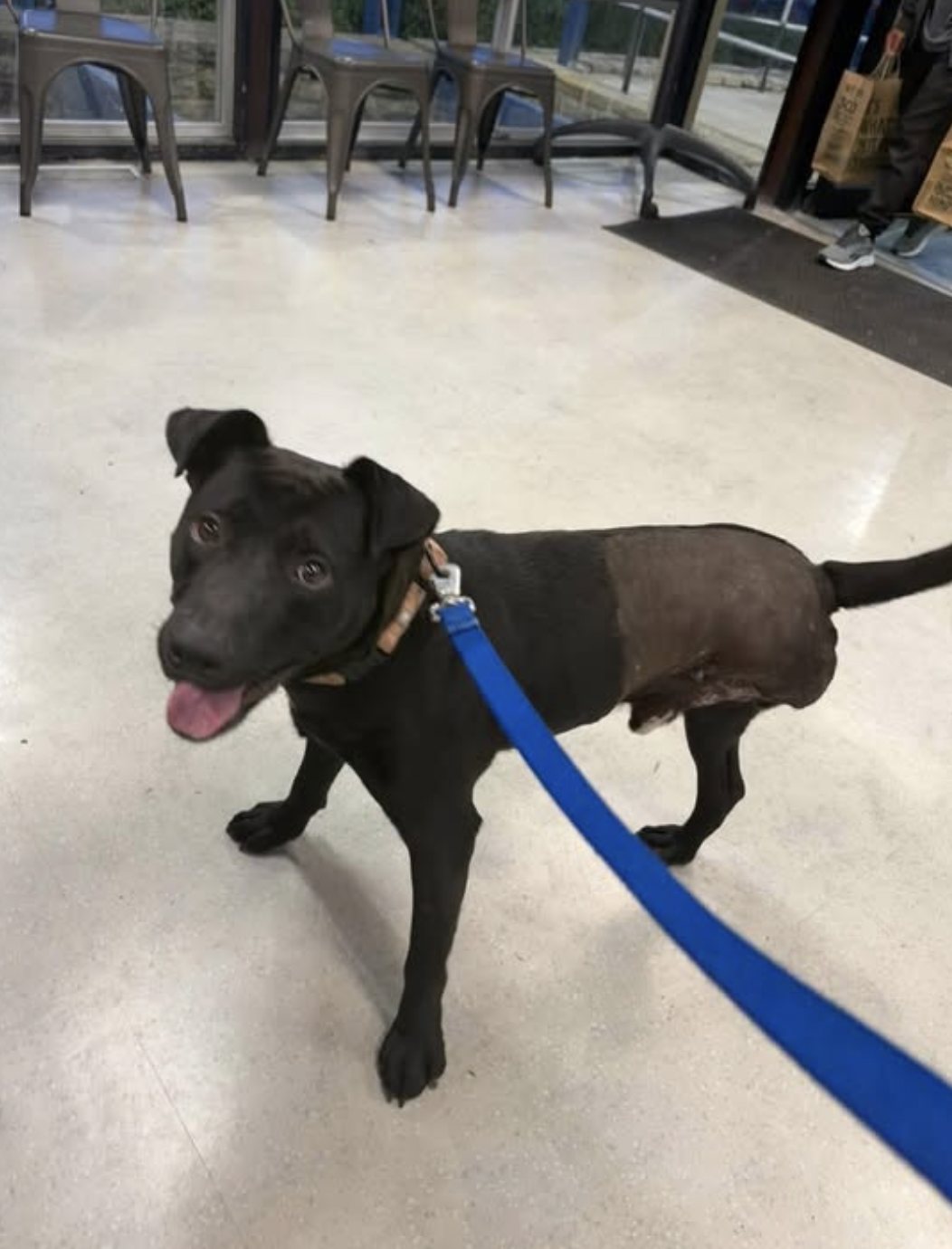
Muscle that is not loaded gets smaller. Disuse atrophy can follow immobilization, inactivity during recovery from surgery, or a dog simply using a leg less because it hurts. A dog with a sore joint does this quietly. It still walks, but it shifts weight off the bad leg, and that leg shrinks.
It happens fast. In a study of ten dogs, thigh girth had dropped significantly two weeks after cruciate surgery. The same paper notes that the quadriceps, the big muscle on the front of the thigh, is especially prone to atrophy when a leg is not working normally. That is why a dog with a torn ACL or hip dysplasia so often has one thin thigh.
Rest is sometimes necessary. A vet may order crate rest after surgery or a disc injury, and you should follow it. The point is that the muscle loss from rest is expected, and rebuilding it is part of the recovery plan, not an afterthought.
Aging
Older dogs lose muscle even when nothing else is wrong. They also tend to move less, sleep more and eat less protein than they need, which speeds things up. Age-related loss is usually even on both sides and shows first along the spine and in the back legs.
Aging rarely works alone. Most senior dogs with thin back legs have some arthritis too, so they have age-related loss and disuse loss stacked together. That is good news in one way, because the disuse part responds well to exercise.
Nerve and spinal conditions
A muscle needs a working nerve. When the nerve supply is damaged, the muscle wastes even if the dog is trying to use it. The best-known example in older dogs is degenerative myelopathy, a progressive disease of the spinal cord. It typically starts with wobbling and weakness in the back legs and, as VCA notes, most dogs with it are weak but do not seem to be in pain. Disc disease and spinal injuries can cause the same kind of muscle loss, often with pain and a much faster onset.
Signs that point to a nerve cause include scuffed or worn toenails, feet that knuckle over, legs that cross when walking, and a sway in the hindquarters.
Illness
Some diseases break muscle down directly. Cachexia is seen in dogs with heart failure, chronic kidney disease and cancer. The dog may still be eating, and may not look thin if it carries fat, but the muscle over the spine, hips and head melts away. Hormone conditions such as Cushing’s disease also weaken muscle. No exercise plan fixes these. The disease needs to be found and treated.
How vets grade muscle loss: the muscle condition score
Vets use a simple scale called the muscle condition score. According to the WSAVA chart, it is judged by looking at and feeling the muscle over the spine, shoulder blades, skull and hip bones, and it has four grades.
| Grade | What it means |
|---|---|
| Normal | Muscle is full over the spine, shoulder blades, head and hips |
| Mild loss | Slight thinning, usually felt alongside the spine first |
| Moderate loss | Clear thinning. Bones are easy to feel and starting to show |
| Severe loss | Very little muscle left over the bones. They are obvious to the eye |
Two points from that chart are worth knowing:
- Loss usually shows first in the muscles on either side of the spine. That is the place to check.
- Muscle and fat are scored separately. An overweight dog can have significant muscle loss, and a thin dog can have good muscle. The bathroom scale tells you nothing about which one you are dealing with.
Body fat has its own 9-point scale. We cover it in how to tell if your dog is overweight. Ask your vet for both scores at every checkup and write them down.
How to check your dog for muscle atrophy at home
You do not need equipment beyond your hands and a soft tape measure. Do this once, then repeat it every two weeks so you can spot a trend.
- Feel along the spine. Run your fingers down each side of the backbone. You should feel firm muscle with the bony points only just noticeable. If the bones feel sharp with a dip on either side, muscle is missing.
- Feel the hips and shoulder blades. The hip bones and the ridge of the shoulder blade should be padded, not sticking up.
- Feel the top of the head. A sharp ridge down the middle of the skull is a sign of muscle loss on the head.
- Compare the thighs. With your dog standing square, cup one thigh in each hand. They should feel the same size and firmness.
- Measure the thighs. Wrap a soft tape around the thigh at the same height each time, about halfway between hip and knee, with your dog in the same position. Measure both sides and write the numbers down.
- Take photos. One from behind and one from above, in the same spot, once a month.
Consistency is what makes the tape useful. Researchers who use thigh girth to track recovery stress that a standard method is needed to keep the readings reliable. Same spot, same leg position, same person if you can.
Also watch function. Time how long your dog takes to stand up from lying down, and note how far it walks before slowing. Those change before the tape does.
When to see a vet
Any dog with muscle loss you can see or feel should have a vet check before you start strengthening. Exercise helps a weak muscle. It does not fix an undiagnosed knee, spine, heart or kidney problem, and it can make some of them worse.
| What you see | How fast to act |
|---|---|
| Sudden weakness, collapse, or a dog that cannot stand | Emergency. Go now |
| Dragging feet, knuckling, wobbling, or loss of bladder or bowel control | Same day |
| Crying out, a hunched back, or guarding a leg | Same day |
| Muscle loss on one side only, or mainly on the head or jaw | Within a few days |
| Muscle loss with weight loss, a change in appetite, more drinking, coughing or tiring easily | Within a few days |
| Slow, even thinning in an older dog that is otherwise well | Book a checkup in the next week or two |
Tell your vet what you measured and when you first noticed the change. Photos help. Expect a hands-on exam, a muscle condition score, and possibly X-rays or blood work depending on what they find.
Can muscle atrophy in dogs be reversed?
Often, yes. How much comes back depends on the cause.
| Type | Realistic goal |
|---|---|
| Disuse | Rebuild most or all of it once the cause is treated and the leg is being used |
| Age-related | Slow the loss, regain some muscle, and keep the dog doing more for longer |
| Nerve-related | Depends on the condition. Where the nerve cannot recover, the goal is to hold on to function |
| Illness-related | Treat the disease first. Nutrition and gentle movement support what is left |
Disuse has the best outlook. In a study of 24 dogs followed for a year after knee surgery, thigh circumference in the operated leg improved significantly over that time. Once the knee was stable and the dogs were using the leg, the thigh muscle grew again.
Age-related loss does not fully reverse, because the aging continues. But an old muscle still responds to being used and fed properly, and regular strength work is the best tool there is for keeping a senior dog on its feet.
Nerve-related loss is the hardest. With a progressive disease like degenerative myelopathy, exercise will not bring the muscle back, but it still matters. In a study of 22 dogs with suspected degenerative myelopathy, the dogs given intensive physiotherapy survived an average of 255 days, compared with 130 days for moderate physiotherapy and 55 days for none. It was a small study, but it is the reason vets tell owners of these dogs to keep them moving.
Illness-related loss follows the disease. If the condition can be controlled, muscle can stabilize. Your vet leads here.
How to rebuild muscle in a dog with atrophy
Rebuilding lost muscle is different from building muscle on a healthy dog. You are starting from a weaker base, usually with a sore joint or an older body, so the loads are smaller and the progress is slower. The order below matters.
Step 1: Treat the cause and control pain
A dog will not load a leg that hurts. If arthritis, a torn ligament or a bad hip is why the muscle went, the pain has to be managed before strength work can do anything. Get the diagnosis, follow the treatment, and ask your vet directly: “Is my dog cleared for strengthening exercise, and is there anything I should avoid?”
Step 2: Load the muscle, a little at a time
Muscle grows when it is asked to do slightly more than it is used to. For a dog with atrophy, “slightly more” starts very small. Work through these stages and only move up when the current one looks easy.
| Stage | Goal | What to do |
|---|---|---|
| 1. Wake it up | Get the dog putting weight through the weak leg | Standing square for 10 to 20 seconds, gentle weight shifts side to side, slow leash walks of about 5 minutes several times a day |
| 2. Controlled strength | Make the back legs push | Sit-to-stands, slow walking over low poles, figure eights, walking up a gentle slope |
| 3. More load | Build size and stamina | Longer hill walks, backing up, stepping up onto a low platform, underwater treadmill sessions |
The exercises that do the most for wasted back legs:
- Sit-to-stand. The dog version of a squat. Ask for a square sit, then a stand, slowly. Start with 3 to 5 and stop while the form is still good.
- Slow leash walking. Slow is harder than fast. At a slow walk each leg has to carry weight for longer, and the dog cannot skip the weak one.
- Hills. Walking uphill moves the work to the back legs. Start with a gentle slope.
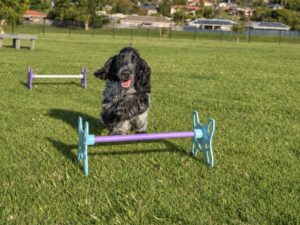
- Cavaletti poles. Stepping over low poles makes the dog lift and place each leg on purpose.
- Weight shifts and balance work. Good for early stages and for dogs with nerve problems.
- Core work. A stronger trunk takes strain off weak back legs.
For step-by-step instructions, see our low-impact exercises for senior dogs and the six back leg exercises in the weak back legs guide. Dogs coming back from an operation should follow the plan in exercises after ACL surgery or exercises for dogs recovering from injury, with the surgeon’s timeline in charge.
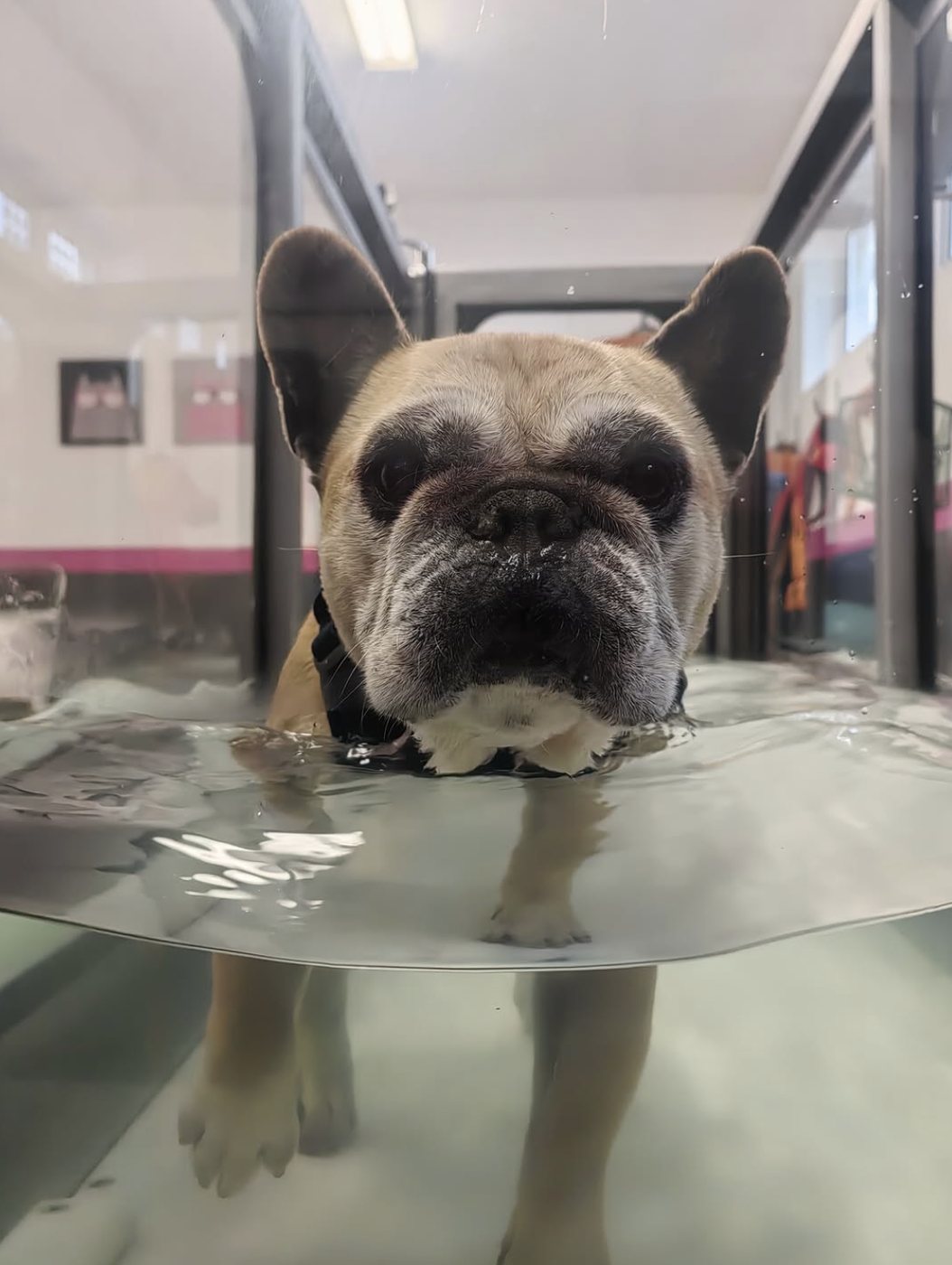
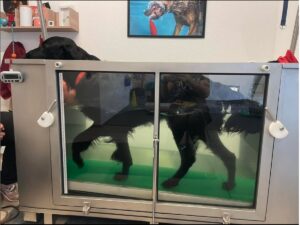
Water is useful when land exercise is too much. In an underwater treadmill the water holds up part of the dog’s weight, so sore joints carry less while the legs still have to work against resistance. It is done at a rehab clinic with a trained therapist. Our dog hydrotherapy guide explains what a session involves and who it suits.
Rules for every stage:
- Short and often beats long and rare. Two or three short sessions a day are better than one big one.
- Work on a surface with grip. Never on tile or hardwood.
- Change one thing at a time: more reps, or a steeper slope, or a longer walk. Not all three.
- If your dog limps, is stiff the next morning or does not want to do the exercise, drop back a stage and tell your vet.
Step 3: Feed enough protein
Exercise is the signal to build muscle. Protein is the material. Without enough of it, the work does not turn into muscle.
Older dogs need more protein, not less. A review of dietary protein in dogs found that protein needs rise by about 50% in older dogs while their energy needs tend to fall, and that restricting protein in healthy older dogs is unnecessary and can be harmful. The AKC cites a study in which 13-year-old Beagles needed at least 50% more protein than 2-year-olds.
In practice that means a complete diet with good-quality animal protein, fed to your dog’s ideal weight. Ask your vet whether your dog’s current food supplies enough. The exception is a dog with kidney disease or another condition where the vet has prescribed a specific diet. Follow that diet and ask before changing anything.
Step 4: Keep your dog lean
Extra fat makes weak legs work harder and sore joints hurt more. In a lifetime study of 48 Labradors, the dogs fed 25% less than their littermates lived a median of nearly two years longer and developed signs of chronic disease later.
Be careful how you take the weight off. A crash diet strips muscle along with fat, which is the opposite of what you want. Cut calories slowly, keep protein up and keep the strength work going. Our dog weight loss plan shows how.
Step 5: Be consistent and track it
Muscle responds to weeks of regular work, not to one hard weekend. Put the sessions at fixed times of day, measure the thighs every two weeks, and keep a simple log: what you did, how your dog moved, and the numbers. If nothing has changed after six to eight weeks of steady work, go back to your vet. Something is still limiting the leg.
A rebuilding plan by cause
| Situation | Start with | Main work | Watch for |
|---|---|---|---|
| After knee or hip surgery | The surgeon’s rehab plan and timeline | Controlled leash walks, then sit-to-stands and slopes as cleared | Swelling, a new limp, doing too much too soon |
| Arthritis or hip dysplasia | A pain plan from your vet | Short daily walks, sit-to-stands, hills, water work | Stiffness the morning after |
| Healthy senior who has slowed down | A vet check and a muscle condition score | Daily walks plus strength work three or four days a week | Slipping, fatigue, skipped meals |
| Nerve condition | A diagnosis and a rehab referral | Daily assisted walking, balance work, water work | Scraped toes, falls, sores from dragging |
| Illness | Treatment of the disease | Gentle daily movement and a diet set by your vet | Appetite, weight and energy |
How long does it take to rebuild muscle?
Longer than it took to lose. The ten dogs in the cruciate study had measurably thinner thighs two weeks after surgery. The 24 dogs in the knee surgery follow-up were checked at six weeks, six months and one year, and their thigh measurements improved across that period. Loss is counted in weeks. Recovery is counted in months.
What to expect along the way:
- First: function. Getting up is easier, walks are a little longer, the back legs shake less.
- Next: feel. The thighs and the muscle beside the spine feel firmer under your hands.
- Last: size. The tape measure and the photos start to show it.
Age, the cause, how long the muscle has been gone and how consistent you are all change the timeline. A young dog recovering from surgery will move faster than a 13-year-old with arthritis. Both can improve.
Supporting a dog with nerve-related muscle loss
When the nerves are the problem, strength work alone is not enough. The dog also needs help staying safe and mobile while it keeps moving.
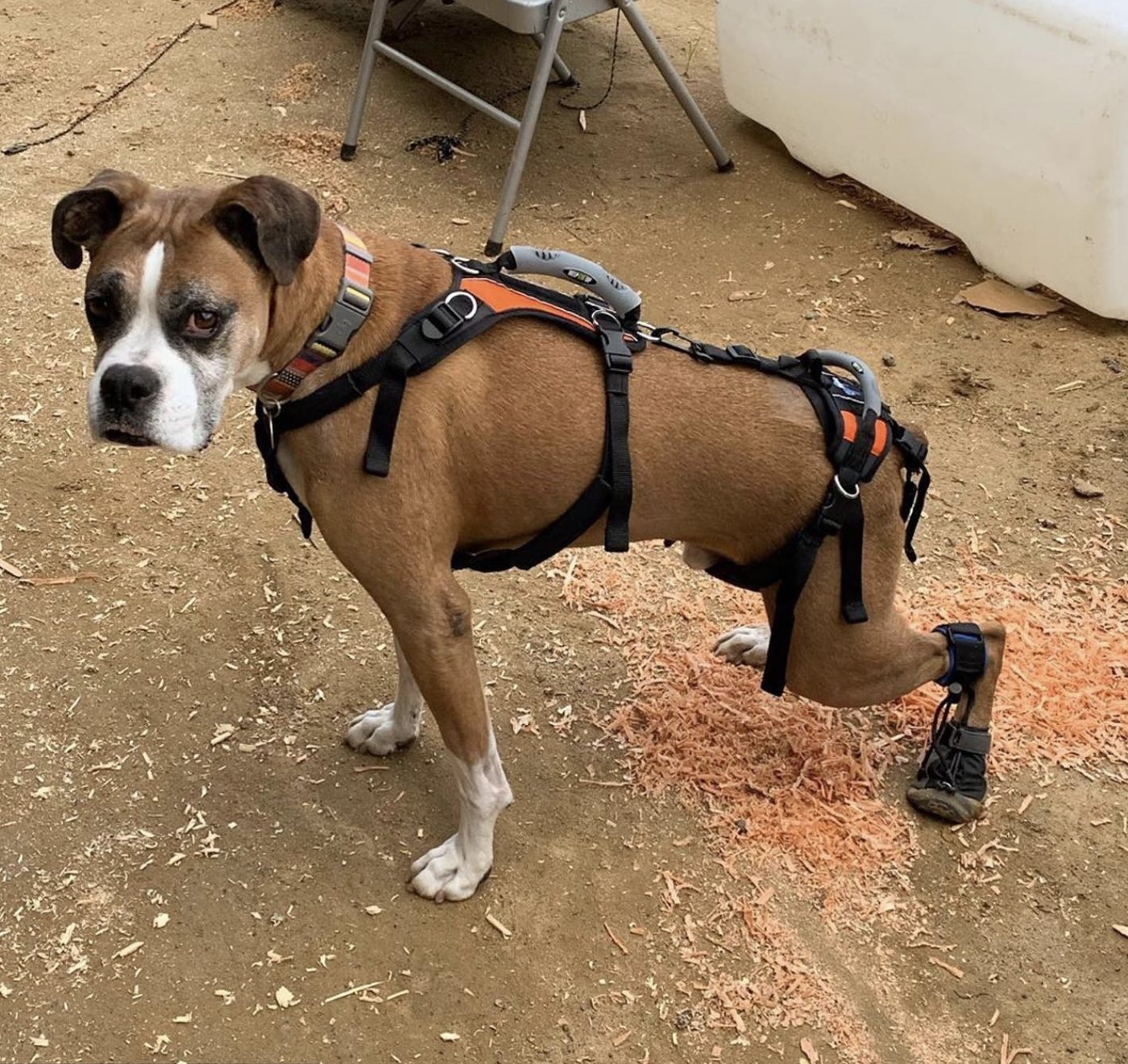
- A rear support harness. A handle over the hips lets you take some of the weight on stairs, into the car and on walks, so the dog can keep using its legs without falling.
- Booties or toe protection. A foot that drags will wear the nails and skin raw. A bootie protects it.
- Grip at home. Rugs and runners on every slick floor the dog crosses.
- Ramps. For the car, the couch and any steps the dog uses daily.
- Skin checks. Look at the tops of the back feet and the hocks every day for scrapes.
Keep the daily movement going for as long as your dog is comfortable doing it. A rehab vet or certified canine rehab therapist can set the right exercises for the stage your dog is at.
What not to do
- Do not write it off as old age. Some loss is common. Fast, uneven or severe loss is not, and all of it deserves a vet check.
- Do not rest a dog longer than the vet asked. Extra rest costs extra muscle.
- Do not make up for a quiet week with one big hike. Weak muscle and big loads are how injuries happen.
- Do not cut protein in a healthy senior. Only restrict it when your vet has a medical reason.
- Do not crash diet. Slow weight loss with strength work protects muscle.
- Do not push through a limp. Pain means the dog will shift off that leg again, and you are back where you started.
- Do not expect a supplement to do the work. Nothing in a jar replaces loading the muscle and feeding it.
- Do not leave slick floors bare. A dog that slips learns to move less.
Frequently asked questions
What causes muscle atrophy in dogs?
The four main causes are disuse, aging, nerve problems and illness. Disuse means the dog is not loading a leg because of pain, injury, surgery or rest. Nerve causes include degenerative myelopathy and disc disease. Illnesses such as heart failure, kidney disease and cancer can also break muscle down. A vet exam is the only way to know which one your dog has.
Can muscle atrophy in dogs be reversed?
Often it can. Muscle lost to disuse usually comes back once the cause is treated and the dog is using the leg again. Age-related loss can be slowed and partly rebuilt with strength work and enough protein. Loss from nerve damage or disease depends on whether the underlying condition can be treated.
How long does it take a dog to regain muscle?
Months, not weeks. Muscle is lost quickly and rebuilt slowly. Most owners see their dog move better before they see the legs get bigger. If you see no change after six to eight weeks of steady work, go back to your vet.
What does muscle atrophy look like in a dog’s back legs?
The thighs look narrow from behind, the hip bones and spine stand out, and the back feet may stand close together. One leg may be thinner than the other. You will often notice trouble getting up, shaky legs and shorter walks at the same time.
Is muscle atrophy painful for dogs?
The muscle loss itself does not hurt. The cause often does. Arthritis, cruciate injuries and disc disease are painful, and pain is why the dog stopped using the leg. Degenerative myelopathy is an exception. Most dogs with it are weak but do not seem to be in pain.
What should I feed a dog with muscle loss?
A complete diet with enough good-quality protein, fed to keep your dog lean. Older dogs need more protein than younger adults, not less. Dogs with kidney disease or another diagnosed condition should stay on the diet their vet prescribed.
Is walking enough to rebuild muscle in a dog?
Walking is the base, but on its own it is usually not enough. Flat walking does not ask much of the back legs. Add slow walking, hills, sit-to-stands and pole work so the muscles have to push harder than they are used to.
Can a dog be overweight and still have muscle atrophy?
Yes. Vets score muscle and body fat separately for this reason. A layer of fat can hide thin muscle over the spine and hips, so feel for it with your hands instead of trusting the scale.
Is muscle loss normal in old dogs?
It is common, and some of it comes with age. That does not mean you should ignore it. Regular strength work, enough protein and a healthy weight slow it down, and a vet check rules out the causes that need treatment.
Where this fits in your dog’s plan
The steps above will get you started, but the right exercises and the right dose depend on why your dog lost muscle, its weight and how it moves. That is what the Senior Dog Strength Program is for: a 30-minute video consult, a plan built for your dog, and 12 weeks of support from your trainer. Vet clearance comes first. If you would rather start on your own, measure both thighs tonight, write the numbers down, and book the vet visit this week.